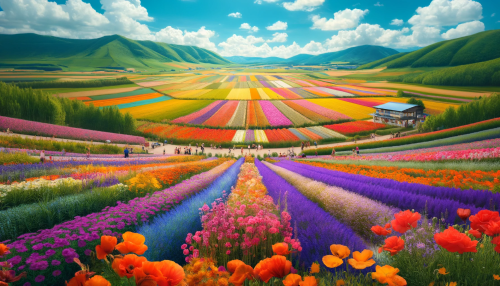
Every spring, Japan’s northernmost island of Hokkaido transforms into a breathtaking spectacle as millions of tulips bloom in vibrant, perfectly arranged rows, painting the land like a living rainbow. From the farms of Kamiyubetsu to the expansive fields of Takinoue, the tulip season has become one of the most celebrated natural events in the country.
Tourists and photographers flock to Hokkaido between late April and mid-May, when the weather is crisp and clear, to witness the stunning panorama of colors. Red, pink, yellow, purple, and white petals stretch across hundreds of acres, swaying gently under the cool mountain breeze and forming visually striking rainbow patterns that are even visible from the sky.
Hokkaido’s tulip fields feature over 120 varieties, totaling more than 1.2 million blooms each year. The meticulous arrangement of flowers is designed not only for beauty but also to create a continuous, colorful stripe effect that enchants visitors from every angle. The seasonal spectacle has earned Hokkaido the nickname “Japan’s Netherlands,” a nod to the famous European tulip landscapes.
Beyond photography and sightseeing, the tulip fields also support local tourism and agriculture, drawing visitors to nearby towns for festivals, markets, and cultural events. Many travelers describe the experience as uplifting and joyful, making it a highlight of Japan’s spring calendar.
Whether viewed from walking paths amid the flowers or from elevated viewpoints, Hokkaido’s tulip fields are a mesmerizing celebration of nature, artistry, and seasonal beauty — a living canvas that transforms the northern Japanese landscape every year.