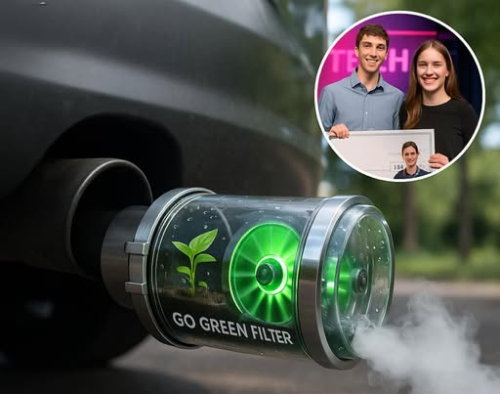
Two enterprising high school students, Jack Reichert and Rohan Kapoor, are making waves in environmental innovation with a device that could transform how we combat vehicle pollution. Their invention, the Go Green Filter, leverages the natural process of photosynthesis to neutralize carbon emissions directly from a car’s tailpipe.
The system centers around a compact bio-reactor integrated into the exhaust, filled with water and a carefully selected mix of algae species. As exhaust gases pass through, the algae absorb carbon dioxide and, aided by a built-in light source, convert it into oxygen. In effect, the device turns a major pollutant into a life-giving gas.
Early tests are promising. According to the students, the Go Green Filter can reduce vehicle emissions by over 74%, offering a cost-effective and eco-friendly alternative to traditional emission control technologies. Experts say that innovations like these, while small in scale, could collectively have a significant impact if widely adopted.
“With transportation being one of the leading contributors to global pollution, even incremental solutions matter,” explained Rohan Kapoor. “We wanted to create something that’s practical, affordable, and scalable—something anyone could use to make a difference.”
Environmental scientists have praised the concept, noting that bio-reactive systems harnessing nature’s own processes represent a growing frontier in sustainable technology. By merging biology with engineering, devices like the Go Green Filter could pave the way for a new generation of climate-conscious innovations.
As climate change continues to pose global challenges, the question remains: can simple, nature-powered solutions like this accelerate efforts to reduce carbon footprints and improve air quality? The work of Jack and Rohan suggests the answer could be yes—and it starts with rethinking how everyday technologies interact with the environment.