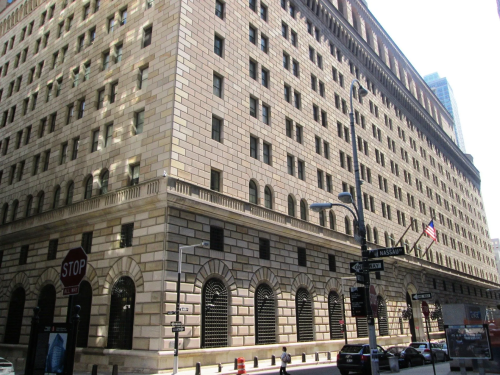
Hidden 80 feet beneath the streets of Manhattan, the Federal Reserve Bank of New York houses what is believed to be the largest gold vault on Earth. The underground chamber contains over 6,000 metric tons of gold, an amount so vast it would dwarf the reserves of many nations.
At current market prices, this treasure trove is valued at approximately $580 billion, roughly equivalent to the entire GDP of a mid-sized country. The gold bars, neatly stacked in towering columns, are stored for foreign governments, central banks, and other financial institutions seeking secure custody far from potential geopolitical or economic risks.
Visitors are extremely rare, and security is intense. Access to the vault involves multiple layers of checks, armed guards, biometric scanners, and steel-reinforced doors. For most people, this immense wealth remains unseen, untouched, and almost unimaginable.
Financial analysts note that the existence of such a concentrated reserve highlights the importance of diversification, counterparty trust, and secure storage in global finance. While most of the world’s gold is traded electronically, this vault serves as the ultimate symbol of physical value in an increasingly digital economy.
The Manhattan gold vault has fascinated historians, economists, and treasure enthusiasts alike, becoming a modern icon of wealth hidden in plain sight — a monumental reminder of the scale of human accumulation and the invisible engines of global finance.