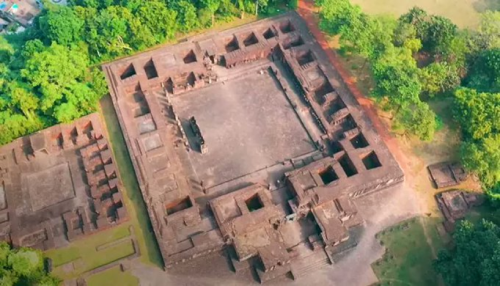
In a breakthrough that could redefine the archaeological map of northern India, experts have uncovered a major Kushan-period Buddhist settlement in Zehanpora, making it one of the most remarkable ancient discoveries in the region in recent years. The excavation, led by regional archaeological authorities and supported by academic institutions, has revealed the remains of a once-prosperous Buddhist centre dating back nearly 2,000 years.
Initial findings from the site include structural foundations, monastic fragments, pottery, sculptural pieces, and cultural artefacts that indicate the settlement’s role as a vibrant centre for Buddhist learning and activity during the Kushan Empire — a period renowned for its patronage of Buddhism and expansive trade networks linking Central Asia to the Indian subcontinent.
Archaeologists believe the discovery shines light on the spread of Buddhism across the Kashmir valley, suggesting that Zehanpora may have been part of a larger monastic network that flourished under Kushan influence. Evidence from the site points to a settlement that was both spiritually active and economically connected, with signs of trade movement, artisan activity, and cultural exchange.
Experts say the implications of this excavation are profound. The settlement could reshape scholarly understanding of ancient trade routes, linking Kashmir to Silk Route corridors that facilitated the movement of goods, monks, ideas, and artistic styles. It also opens new avenues for studying architectural patterns and religious spaces from a period when Buddhism was at its cultural peak in the region.
Historians note that the Kushan Empire played a crucial role in spreading Buddhist philosophy, art, and iconography from northern India to Central Asia and beyond. The Zehanpora discovery reinforces this legacy, providing tangible evidence of how monastic life took root in remote valleys and shaped local cultural landscapes.
As the excavation progresses, archaeologists expect to uncover more information about the layout of the settlement, its monastic structures, and its socio-economic connections. Plans are already underway for extensive documentation, conservation efforts, and potential development of the site for public heritage tourism.