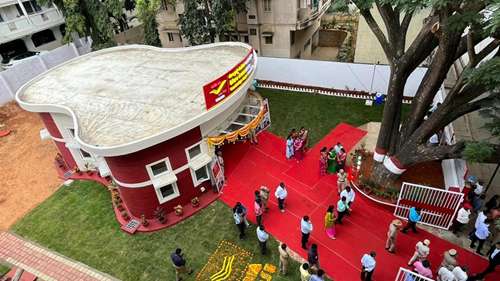
India has taken a monumental step into the future of construction with the inauguration of the nation’s first 3D-printed public office. The pioneering structure, which is a fully functional Post Office, stands in Bengaluru’s Cambridge Layout, demonstrating how cutting-edge technology can deliver infrastructure projects with unprecedented speed and efficiency.
The project was executed by construction giant Larsen & Toubro (L&T), leveraging specialized 3D concrete printing technology. The construction process replaces traditional bricklaying and formwork with a large, robotic arm that precisely deposits a special, quick-hardening concrete mix layer-by-layer, based on a digital 3D model.
Record Speed: The 1,021 square-foot post office was completed in a mere 43 days, finishing two days ahead of schedule. This is a dramatic reduction in the construction timeline, which would typically take 6 to 8 months using conventional methods.
Cost and Waste Reduction: The use of robotic printing and the specialized concrete mix allowed L&T to reduce labor requirements and cut construction costs by an estimated 30-40% compared to traditional building practices. This method also inherently reduces material waste.
Design Flexibility: The technology allowed for the construction of a unique design featuring curved exterior walls—a complex architectural element that is difficult and costly to achieve with conventional construction.
A Symbol of ‘Aatmanirbhar Bharat’
The project has been celebrated by senior government officials, including Prime Minister Narendra Modi, who hailed it as a “testament to our nation’s innovation and progress” and a symbol of the spirit of “Aatmanirbhar Bharat” (Self-Reliant India).
The 3D-printed post office is more than just a novelty; its success has sparked official interest in adopting this technology for widespread use, particularly in:
Affordable Housing: Reducing construction time and cost makes 3D printing a viable solution for the country’s need for high-volume, low-cost housing.
Remote Area Infrastructure: The technology’s ability to operate with minimal manual intervention and in potentially remote locations makes it ideal for building post offices and other public facilities where traditional labor supply is scarce.
The successful completion of this office firmly positions India on the global map of advanced construction and manufacturing.