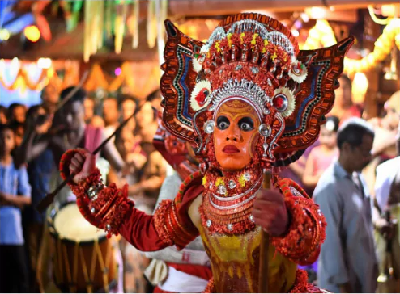
India’s deep-rooted spiritual heritage finds rare continuity in Bhutam and Theyyam, the only extant pre-Vedic ritual dance forms still performed today. Originating from Karnataka and Kerala, respectively, these dances are powerful expressions of ancestral worship, where performers embody local deities and spirits.
These ritualistic performances reflect a belief system that predates the Vedas, offering a glimpse into India’s tribal and indigenous spirituality. Costumes, masks, and trance-like states are central to these dances, transforming the performers into divine mediums in ceremonial spaces.
In parallel, India also boasts a rare literary treasure with Jayadeva’s 12th-century Sanskrit masterpiece, the Gita Govinda — the only pan-Indian dance text. This lyrical poem, celebrating the divine love of Krishna and Radha, has been choreographed across all major Indian classical dance forms including Bharatanatyam, Odissi, Kathak, Kuchipudi, and Manipuri. It is also rendered in both Hindustani and Carnatic musical traditions and has been translated into several European languages, underscoring its global resonance.
Together, these two cultural legacies — the tribal and the classical — represent the vast, unbroken spectrum of Indian dance traditions from ancient times to the present.