Mumbai, As India continues to soar in the global aviation industry, a look back reveals two landmark moments that laid the groundwork for civil aviation in the country.
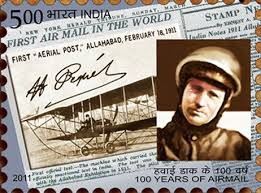
On 18 February 1911, a French pilot, Henri Piquet, made history by flying a Humber-Sommer biplane carrying 6,500 letters and postcards from Allahabad (now Prayagraj) to Naini Junction, a distance of roughly 10 km. This flight, though short, marked the world’s first official airmail service under the patronage of the British Imperial Post. It remains a proud footnote in both Indian and world aviation history.
However, civil aviation in India truly took flight on 15 October 1932, when J.R.D. Tata, a pioneering aviator and visionary industrialist, piloted a D.H. Puss Moth aircraft on a 2,092 km journey for Tata Air Services. Starting from Drigh Road Aerodrome in Karachi (then part of undivided India), he delivered mail to Bombay’s Juhu Aerodrome, and later flew onward to Madras (now Chennai).
This initiative by Tata laid the foundation for what would evolve into Air India, the nation’s flagship carrier, and established Tata Sons as a cornerstone in Indian aviation.
From mail drops to mega hubs, these early flights stand as powerful symbols of India’s progress in the skies.