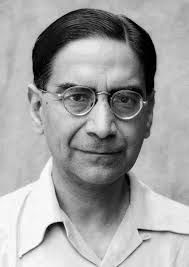
Prasanta Chandra Mahalanobis (1893–1972) was a pioneering Indian statistician, best known for his contributions to statistical theory and economic planning in India.
1. Mahalanobis Distance (1936)
A statistical measure that calculates the distance between a point and a distribution.
Useful in cluster analysis, classification, and pattern recognition.
Widely applied in data science, machine learning, and finance today.
2. Fractile Graphical Analysis (1936)
A technique for studying economic and social inequalities.
Used to analyze income distribution, population studies, and growth patterns.
3. Role in Economic Planning
Played a key role in India’s Five-Year Plans, particularly in the Second Five-Year Plan (1956–61), which emphasized industrialization.
Developed the Mahalanobis Model, which influenced economic development strategies.
4. Founder of the Indian Statistical Institute (ISI) (1931)
Established in Kolkata, ISI became a world-class institution for statistical research and applications.
5. First Indian Statistician to be Elected as a Fellow of the Royal Society (FRS) (1945)
Recognized internationally for his work in statistics.
Known as the “Father of Indian Statistics.”
National Statistics Day (June 29) is celebrated in India in his honor.
His methods continue to influence modern statistics, economics, and machine learning.
Mahalanobis revolutionized statistics and data-driven policymaking, leaving a lasting impact on India’s scientific and economic progress.