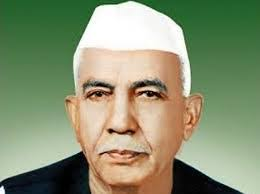
Charan Singh was the fifth Prime Minister of India, serving from July 28, 1979, to January 14, 1980. He is notable for being the first Prime Minister of India who did not face the Parliament during his tenure.
Birth: Charan Singh was born on December 23, 1902, in the village of Noorpur, in present-day Uttar Pradesh, India. He came from a peasant family and had a strong connection to rural India throughout his life.
Charan Singh entered politics in the 1930s, initially getting involved in the Indian freedom movement. He was influenced by the Gandhian ideals of non-violence and joined the Indian National Congress.
Over time, Charan Singh’s political ideology shifted towards agrarian reforms and the welfare of farmers. He later became a prominent leader of the Kisan (Farmers’) Movement, advocating for better rights and conditions for the rural population.
He held various important positions before becoming Prime Minister, including Union Minister for Home Affairs and Minister for Agriculture in the Indira Gandhi government.
In 1967, Charan Singh was part of a group of Congress leaders who broke away and formed the Kranti Morcha, which later merged into the Samyukta Socialist Party.
Charan Singh became the Prime Minister of India on July 28, 1979, after a series of political developments that led to the resignation of Morarji Desai, the previous Prime Minister.
He was appointed as Prime Minister with the support of the Indian National Congress (INC). However, this was a short-lived government.
Charan Singh’s government was unstable from the beginning. His coalition government lost the support of the Congress, and it failed to command a majority in the Parliament.
Indira Gandhi, the leader of the Congress, withdrew support for his government, leading to its collapse within just nine months.
One of the most significant aspects of Charan Singh’s tenure was that he never faced a vote of confidence in the Lok Sabha (the lower house of India’s Parliament).
Charan Singh’s government was built on a fragile coalition, and it was unable to gain the necessary majority to hold a confidence motion in Parliament. This lack of a parliamentary majority contributed to the government’s downfall.
The opposition parties refused to support Charan Singh’s government, and after his resignation on January 14, 1980, elections were called, which led to Indira Gandhi’s return to power.
After his resignation, Charan Singh’s political career continued, but he was never able to regain the level of influence he had enjoyed before.
He continued to play a role in Indian politics and was a founding member of the Janata Party, the main opposition party to Indira Gandhi’s Congress in the late 1970s.
Charan Singh is also remembered for his contributions to agriculture and rural welfare, focusing much of his political career on improving the conditions of farmers and rural communities.
Charan Singh is often remembered as a caretaker Prime Minister who faced significant challenges in managing a fragmented political landscape.
His tenure marked a period of political instability, but he remains a figure who championed the cause of farmers and rural India.
Though his time in office was brief, Charan Singh’s political legacy persists, especially among those who emphasize the need for agricultural reforms and greater attention to the rural economy.
Charan Singh was the first Prime Minister of India who did not face the Parliament during his tenure, as his coalition government lacked the necessary support to win a confidence motion. He served as Prime Minister from July 28, 1979, to January 14, 1980, but his government collapsed due to a lack of majority support. Despite the shortness of his tenure, Charan Singh remains an important figure in Indian politics, particularly for his focus on rural welfare and agriculture.