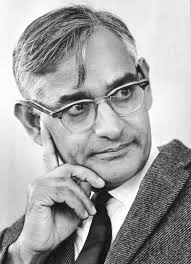
Hargobind Khorana (1922–2011) was the first person of Indian origin to receive the Nobel Prize in Physiology or Medicine. He was awarded the Nobel Prize in 1968 for his groundbreaking work in the field of genetics and biochemistry.
Genetic Code: Khorana’s most significant contribution was in the understanding of the genetic code and how it governs protein synthesis. He decoded how DNA sequences dictate the synthesis of proteins, a discovery that revolutionized molecular biology and opened new pathways in genetics.
Nobel Prize: Khorana shared the 1968 Nobel Prize with Marshall Nirenberg and Robert Holley for their work on the genetic code. Khorana’s specific work involved synthesizing artificial genes in the laboratory, demonstrating how the sequence of nucleotides in DNA determines the sequence of amino acids in proteins.
He studied at Punjab University and later completed his Ph.D. at the University of Liverpool in England. He then continued his research in the United States.
Academic Positions: Khorana held teaching and research positions at several prestigious institutions, including the University of Wisconsin and the Massachusetts Institute of Technology (MIT).
His discoveries helped advance the field of biotechnology, particularly in the understanding of the genetic code and its applications in medicine and genetics.
Khorana is remembered as a pioneer in molecular biology, and his work laid the foundation for genetic engineering and genomics.
Hargobind Khorana became the first person of Indian origin to win a Nobel Prize in Medicine in 1968 for his groundbreaking work on the genetic code and the role of DNA in protein synthesis. His research was instrumental in advancing our understanding of genetics, and his legacy continues to influence biotechnology and molecular biology today.