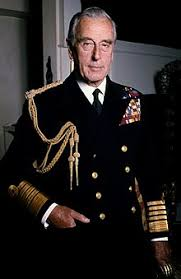
Lord Louis Mountbatten, the last British Viceroy of India, became the first Governor-General of independent India after the country gained independence on August 15, 1947. His role in India’s transition from British colonial rule to independence is pivotal, and his tenure left a lasting mark on the nation’s history.
Mountbatten was appointed as the Viceroy of India in March 1947, taking over from Lord Wavell. His primary role was to oversee the transition of power from British colonial rule to an independent India.
He was chosen for his leadership qualities and his experience as a member of the British royal family. He was also known for his close ties with India’s political leaders, especially Jawaharlal Nehru and Muhammad Ali Jinnah.
Mountbatten’s tenure coincided with the final phase of the Indian independence movement and the partition of India into two independent nations: India and Pakistan.
Although the decision to partition India was made by the British government, Mountbatten is often associated with the manner in which the partition was executed. The Partition of India in 1947 led to the creation of Pakistan and was accompanied by significant violence and mass migrations.
On August 15, 1947, India gained independence, and Mountbatten became the first Governor-General of India. As the representative of the British monarch, he held ceremonial authority over the newly independent country.
He worked closely with Jawaharlal Nehru, the first Prime Minister of India, to ensure the smooth transition of power. Mountbatten played an instrumental role in negotiations and in organizing the formal handover of power.
As Governor-General, Mountbatten oversaw the establishment of the Dominion of India within the Commonwealth. India remained a dominion with the British monarch as the head of state, though the country was now free from British rule.
He worked with the Indian leadership to navigate the early years of independence, particularly in addressing the challenges of partition, refugee crises, and communal violence.
Mountbatten served as Governor-General until June 1948, when he was succeeded by C. Rajagopalachari, the first Indian to hold the position.
After leaving India, Mountbatten returned to Britain and was appointed Lord of Burma, though his connection with India remained significant.
He was later involved in international affairs, particularly as the last British governor of British Burma, and was an advocate for improving British-Indian relations in the post-independence era.
Lord Mountbatten’s legacy is a mixed one. He is credited with playing a critical role in the peaceful transfer of power in India. However, his role in the partition remains controversial due to the violence and displacement that accompanied it.
He was assassinated in 1979 by the Irish National Liberation Army (INLA), who placed a bomb on his boat in Ireland. The tragic end to his life cast a shadow on his later years.