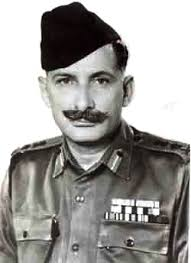
Sam Hormusji Framji Jamshedji Manekshaw, more commonly known as Field Marshal Sam Manekshaw, was India’s first Field Marshal and one of the most revered military leaders in Indian history. His career spanned several decades, and he played a pivotal role in India’s military history, most notably during the Indo-Pakistani War of 1971, which led to the creation of Bangladesh.
Born on April 3, 1914, in Amritsar, Punjab, Manekshaw joined the Indian Military Academy (IMA) in Dehradun in 1932, passing out in 1934 as a Second Lieutenant in the British Indian Army.
He served during World War II, where he gained prominence for his leadership during the Burma Campaign (1942-1945).
Manekshaw became the Chief of Army Staff (COAS) of the Indian Army in 1969.
His strategic and decisive leadership played a key role in India’s victory during the 1971 Indo-Pakistani War, which led to the creation of Bangladesh. Manekshaw’s decision-making, especially his insistence on waiting for the right moment to launch an attack, earned him widespread admiration.
His famous statement before the war, “If a man says he is not afraid of dying, he is either lying or a Gurkha,” showed his confidence and understanding of military strategy.
In 1973, Manekshaw was promoted to the rank of Field Marshal—the highest rank in the Indian Army.
He was the first officer in India’s history to be elevated to this position, an honor given for his exemplary military service and leadership.
Known for his sharp intellect and charisma, Manekshaw earned the respect not only of his troops but also of world leaders and military officials.
He was instrumental in modernizing the Indian Army and establishing it as a formidable force in the region.
His leadership and vision contributed to India’s strategic defense posture and the professional development of the armed forces.
After retiring from the military in 1973, Manekshaw remained active in public life. He often participated in various national forums and remained a respected voice in defense matters.
He passed away on June 27, 2008, at the age of 94.
Padma Bhushan (1968) and Padma Vibhushan (1972) were awarded to him for his distinguished service in the Indian Army.
His legacy as a military tactician and leader continues to influence Indian military thought, and his name is synonymous with courage, leadership, and patriotism.