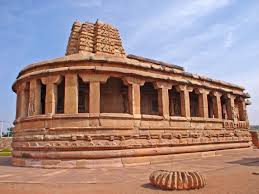
The Durga Temple at Aihole in Bagalkot District, Karnataka, is an important architectural and historical structure, dating back to the 7th century CE. It is known for its unique design, which marks a significant departure from traditional temple layouts of the time.
- The sanctum where the idol of the deity is enshrined has a unique semicircular shape, which is atypical for the temples of this period, showcasing an experimental style of architecture.
- The temple is 18 meters (59 feet) long and 11 meters (36 feet) wide, with an impressive 7-meter (23 feet) verandah. The temple’s layout is designed to accommodate both worship and large gatherings, reflecting the importance of the site in local religious practices.
- The temple features a flat roof, rising to 9 meters (29 feet 6 inches) above the ground. This is surmounted by a gopuram (a monumental entrance tower), which is a typical feature in later South Indian temples, although it is not common in earlier temples of this type.
- Built on the site of an earlier Buddhist chaitya hall, the temple reflects the transition of religious practices in the region. Aihole was an important center for early Chalukyan architecture, and the Durga Temple is one of its earliest and most notable contributions to Hindu temple design.
- The temple belongs to the early Chalukyan style, a period that saw the experimentation and development of several architectural techniques, particularly in temple construction. The Durga Temple’s design influences later temple structures in the region and is often studied for its contribution to the evolution of Dravidian temple architecture.
This temple, along with several others in Aihole, is part of the region’s rich heritage as a center of art, architecture, and culture during the early medieval period.