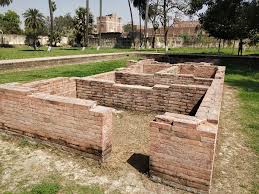
Kumrahar, located in Patna, Bihar, is an archaeological site dating to around 250 BCE and is believed to be associated with Emperor Ashoka, one of the most prominent rulers of the Maurya Empire. The site holds significant historical importance due to its association with Ashoka and the architectural features it reveals about the grandeur of his reign.
- The most notable feature of the site is the 84-pillar hall, which is believed to have been a part of the palace complex.
- The remains of the columns at the site suggest the presence of a large, impressive hall, which would have served as a public or ceremonial space.
- The hall was originally constructed from wood, but over time, the wood decayed, leaving only the stone foundations and column remnants.
- The use of 84 pillars in the design suggests that the hall was both grand and spacious, indicative of the royal and imperial nature of the palace.
- The large number of columns would have given the hall a sense of magnificence and openness, capable of accommodating large gatherings, administrative functions, or royal audiences.
- Kumrahar is widely believed to have been one of Ashoka’s royal residences, particularly during his early reign.
- Ashoka, who ruled from around 268 BCE to 232 BCE, was known for his support of Buddhism after embracing it following the bloody Kalinga War. His palaces and structures reflect the empire’s cultural richness and commitment to urban development.
- The palace site at Kumrahar reflects the advanced urban planning of Patna, known as Pataliputra during Ashoka’s time. The city was an important political and cultural center in ancient India.
- The remains at Kumrahar offer valuable insights into the architectural styles and construction techniques of the Maurya period, especially the use of pillars in monumental structures.
- Kumrahar is one of several ancient sites linked to Pataliputra, which was the capital of the Maurya Empire and later served as the capital for various dynasties, including the Gupta Empire.
- The Maurya period marked a time of remarkable political consolidation, administrative sophistication, and cultural achievements, with Ashoka’s reign being particularly significant for his transformation into a patron of Buddhism and his promotion of moral governance.
- The 84-pillar hall at Kumrahar exemplifies the imperial grandeur of Ashoka’s era and his architectural achievements.
- The site continues to provide an important archaeological link to the grandeur of Pataliputra and the Mauryan Empire, which influenced much of ancient India’s political and cultural landscape.
Kumrahar stands as a symbol of Ashoka’s imperial authority and his legacy in architecture, representing a royal palace that would have once housed the cultural and administrative activities of one of the greatest empires in Indian history.