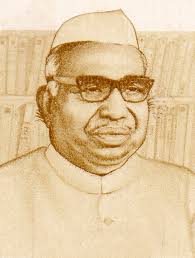
Jagjivan Ram (1908–1986) was an influential Indian political leader, social reformer, and a prominent Dalit leader who made significant contributions to India’s political and social landscape after independence. He held various key ministerial positions in the Government of India over a remarkable span of 28 years, leaving a lasting impact on the nation’s governance, labor policies, and social justice initiatives.
Jagjivan Ram was born on 5 April 1908 in a Dalit family in the village of Arjun in Bihar. He was deeply committed to the upliftment of the Dalit community and fought against the social discrimination that they faced in Indian society. His early education was at a local school, and he later studied at the Patna University.
Ram was actively involved in politics from a young age and was influenced by the Indian National Congress (INC), the political party that led India’s independence movement. He was initially a member of the Congress Party and aligned himself with leaders like Jawaharlal Nehru and Sardar Vallabhbhai Patel. Jagjivan Ram became an advocate for social justice, labor rights, and the elimination of untouchability.
Jagjivan Ram held several key ministerial positions in the Indian government, serving in various ministries under different prime ministers. His tenure as a Union Minister spanned over three decades, from India’s independence in 1947 to 1979.
Jagjivan Ram was appointed as the Minister of Labour in the first Cabinet of Independent India. During his tenure, he worked to improve the rights and welfare of workers in the country. He played a key role in shaping labor policies that would lay the foundation for labor welfare and industrial relations in India. He advocated for workers’ rights, better working conditions, and fair wages, and made significant contributions to the formulation of the Industrial Disputes Act and other policies that were designed to protect laborers.
In 1952, Jagjivan Ram was appointed as the Minister for Transport and Communications. In this role, he was responsible for overseeing the development of India’s transportation and communication infrastructure, which was essential for the growth of the economy and the integration of the country after independence. His efforts led to improvements in roads, railways, and telecommunication systems, which played a significant role in enhancing connectivity across the country.
Jagjivan Ram served as the Defence Minister of India from 1970 to 1974. This period included the 1971 Indo-Pak War, a crucial event in India’s history that led to the creation of Bangladesh. Ram’s leadership during this critical time was widely acknowledged, and he worked closely with Prime Minister Indira Gandhi and the Indian military to ensure a successful outcome in the war. His contributions were instrumental in India’s military strategy and in managing the defense ministry during a time of national crisis.
Despite his long and illustrious career, Jagjivan Ram took a break from the Cabinet between 31 August 1963 and 24 January 1966. During this period, he remained active in party politics and continued to engage with the national discourse, contributing his views on issues such as social justice, labor rights, and governance. His break in service did not diminish his prominence as a political leader, and he remained an influential figure in Indian politics.
Jagjivan Ram was a stalwart of social justice and worked tirelessly for the upliftment of Dalits, who were historically marginalized in Indian society. He was a vocal advocate for the implementation of affirmative action policies, including reservation in education and employment for the Dalit and backward communities. As a prominent Dalit leader, his efforts helped to secure a more inclusive and equitable society for millions of Indians who had been subjected to social discrimination.
He was known for his pragmatic approach to politics, balancing his commitment to social justice with his ability to work within the broader framework of national governance. His leadership in various ministries showcased his versatility and ability to handle complex administrative and policy challenges.
Jagjivan Ram’s legacy is marked by his contributions to social justice, governance, and national security. His long tenure in the government reflects his deep commitment to the development of India, particularly in areas like labor welfare, defense, and infrastructure. He was highly respected across party lines, not only for his political acumen but also for his unwavering commitment to the welfare of marginalized communities.
Jagjivan Ram was also an important member of the Congress Party, but in 1967, he parted ways with Indira Gandhi’s leadership over ideological differences. He went on to form the Congress (O), a faction of the Indian National Congress, and later joined the Janata Party in 1977. His decision to break with the Congress Party showed his willingness to stand by his principles, even if it meant opposing the dominant political forces.
His contributions as a Dalit leader, championing social justice and equality, are celebrated even today. He remains an icon in the history of Indian politics, and his efforts to uplift the Dalit community continue to inspire many.
Jagjivan Ram passed away on 6 July 1986, but his impact on Indian politics and social reform endures. His legacy lives on in the continued efforts for social justice, equity, and the betterment of marginalized sections of society.