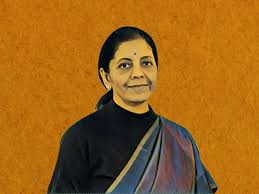
Nirmala Sitharaman is a prominent Indian politician and the first woman to serve as the full-fledged Finance Minister of India. Her remarkable career has made history in several key areas of Indian governance.
On 31 May 2019, Nirmala Sitharaman was appointed as the Finance Minister in Prime Minister Narendra Modi’s second cabinet.
This made her the first woman to be a full-fledged Finance Minister of India.
Prior to this, Indira Gandhi, the former Prime Minister, had briefly held the position of Finance Minister in 1970-71, but her tenure was much shorter and she was simultaneously serving as the country’s prime minister.
Nirmala Sitharaman also made history in 2014 when she was appointed as the Defence Minister of India. This made her the first woman to hold the position as Defence Minister independently (without any other portfolio).
She served in this capacity from 2014 to 2019, overseeing the defense needs of the nation during a time of growing security challenges and defense modernization.
As Finance Minister, Sitharaman presented the Union Budget for 2019 and also played a crucial role in the government’s efforts to address key economic issues, such as economic slowdown, tax reforms, and public sector reforms.
One of her key achievements was the launch of several initiatives aimed at stimulating economic growth, including measures to improve the ease of doing business, tax reforms, and steps to encourage foreign investment.
Her budget for 2020 focused on economic recovery post-COVID-19, with targeted reforms aimed at fostering employment and boosting infrastructure development.
Nirmala Sitharaman holds a degree in economics from Jawaharlal Nehru University (JNU), New Delhi.
She was also a research scholar in economics at JNU, and prior to her political career, she worked in the private sector in the telecommunications industry and in various academic and advisory roles.
Before becoming Finance Minister, Sitharaman held several important roles, including being appointed as the Minister of State for Commerce and Industry in 2014.
In this role, she was responsible for important aspects of India’s foreign trade policy, as well as the Make in India initiative aimed at boosting manufacturing and promoting investment.
Sitharaman has been a strong advocate for gender equality and has pushed for greater representation of women in various sectors, including the armed forces and business.
As Defence Minister, she made significant efforts to push for defense modernization, increase the role of private sector participation, and enhance military preparedness.
Sitharaman is recognized globally for her contributions as a finance and defense minister, and her leadership is often noted for her ability to balance strong economic reforms with the challenges of national security.
She has been invited to speak at major global forums, including the World Economic Forum (WEF) and International Monetary Fund (IMF), discussing key issues like global trade, economic recovery, and geopolitical stability.
As the first woman Finance Minister, she shattered barriers in Indian politics and continues to play an influential role in shaping India’s economic future.
Her tenure as the first woman Defence Minister further solidified her legacy as a pioneering figure in India’s governance.
She continues to be a leading figure in Indian politics, recognized for her commitment to public service and her ability to handle multiple critical portfolios with confidence.
In summary, Nirmala Sitharaman’s political journey stands as a testimony to her leadership and vision for India’s economic and defense growth. As India’s first full-fledged woman Finance Minister and the first woman Defence Minister, she has made an indelible mark on the history of Indian governance.