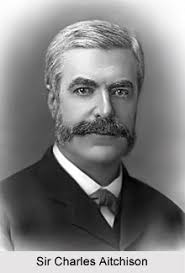
- The Public Service Commission (PSC) was established in 1926 under the chairmanship of Sir Charles Umpherston Aitchison, who was the Governor of Punjab at the time.
- The creation of the PSC was part of the British government’s broader effort to reform the Indian Civil Services (ICS), which had been traditionally dominated by British officers.
- This step was also in response to growing demands for a more inclusive and merit-based recruitment process that would allow Indians to participate more fully in the governance of their country.
- Prior to the PSC’s establishment, the Indian Civil Services had been primarily filled by British officers, which limited the opportunities for Indians to take on key administrative roles.
- Indian reformists, including political leaders and social activists, advocated for the Indianization of the ICS, calling for greater Indian participation based on merit rather than the British system of recruitment.
- The establishment of the Public Service Commission marked the beginning of the process of Indianizing the civil services, though this process was slow and limited in scope at the outset.
- The PSC was tasked with conducting examinations and interviews for the recruitment of Indian Civil Services and other higher administrative positions in the British Indian Government.
- However, the powers of the PSC were initially limited, as Indian candidates were still required to undergo competitive exams in London to join the ICS.
- Despite this limitation, the formation of the PSC in 1926 was a crucial first step toward Indianizing the civil services and providing Indian candidates with an opportunity to serve in high-level administrative roles.
- Sir Charles Umpherston Aitchison, a prominent British administrator, played a pivotal role in the formation of the Public Service Commission.
- He had previously contributed to the establishment of Punjab University and other educational and administrative reforms in the region.
- Under his leadership, the PSC’s primary task was to recommend appointments to various government positions based on merit, thereby encouraging a more inclusive recruitment system.
- The Public Service Commission of 1926 laid the groundwork for the creation of the Union Public Service Commission (UPSC) after India’s independence in 1947.
- The UPSC, established under Article 315 of the Indian Constitution, continues to play a central role in recruiting civil servants in modern India.
- Today, the UPSC is responsible for conducting competitive examinations for prestigious positions in various administrative services like the Indian Administrative Service (IAS), Indian Foreign Service (IFS), and Indian Police Service (IPS).
- The formation of the PSC in 1926 was an acknowledgment of the growing demand for greater Indian participation in governance.
- While the British retained power, the commission was an important step in establishing a more inclusive and merit-based system for recruiting civil servants.
- The 1926 PSC acted as a precursor to the UPSC, which continues to serve as the apex body for the recruitment of India’s civil servants.
- The UPSC ensures a meritocratic approach to selecting officers for key administrative roles, a concept that was introduced with the formation of the PSC.
- Following India’s independence in 1947, the PSC’s role evolved into the Union Public Service Commission (UPSC), which was formally established in 1950.
- The UPSC took over the responsibility of conducting competitive examinations for various civil services and administrative positions in independent India, carrying forward the legacy of the Public Service Commission.
- The establishment of the PSC in 1926 was a turning point in the recruitment process for civil services in India, marking a shift toward a merit-based system that opened doors for more Indians to join the civil services.
- While initially limited, the formation of the PSC was a significant step in the gradual Indianization of the civil services, which would become a critical component of India’s administrative and governance structure post-independence.
If you’d like to explore more about the evolution of civil services in India, the role of the UPSC, or merit-based recruitment, feel free to ask! The establishment of the PSC was a key milestone in the journey toward a more inclusive and democratic India.