The Magenta Line of the Delhi Metro has etched its name in India’s transit history as a symbol of innovation and automation. Launched on 25 December 2017 by Prime Minister Narendra Modi, the line initially connected Kalkaji Mandir in Delhi to Botanical Garden in Noida over a 12.64 km stretch with nine stations, including major interchanges.
The corridor was later extended on May 29, 2018, creating a 37 km route between Janakpuri West (West Delhi) and Botanical Garden (Noida), linking key hubs through interchanges at Kalkaji Mandir (Violet Line), Hauz Khas (Yellow Line), Janakpuri West (Blue Line), and Botanical Garden (Blue Line).
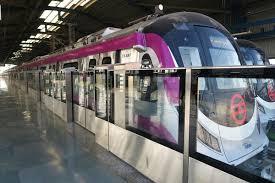
Equipped with Communication-Based Train Control (CBTC) technology, the Magenta Line allows high-frequency, high-safety operations with real-time monitoring, speed regulation, and automatic braking. Underground stations also feature platform screen doors to enhance passenger safety and energy efficiency.
The defining milestone came on 28 December 2020, when the Magenta Line became India’s first ‘driverless’ metro, operating under DTO mode with trains controlled remotely from the Operations Control Centre—joining the ranks of countries like France, Germany, South Korea, and Japan.
This achievement not only showcases India’s adoption of AI-based and automated transport systems but also reflects a broader push towards smart urban mobility, efficiency, and sustainable transit solutions.